
- English
- Español
- Português
- русский
- Français
- 日本語
- Deutsch
- tiếng Việt
- Italiano
- Nederlands
- ภาษาไทย
- Polski
- 한국어
- Svenska
- magyar
- Malay
- বাংলা ভাষার
- Dansk
- Suomi
- हिन्दी
- Pilipino
- Türkçe
- Gaeilge
- العربية
- Indonesia
- Norsk
- تمل
- český
- ελληνικά
- український
- Javanese
- فارسی
- தமிழ்
- తెలుగు
- नेपाली
- Burmese
- български
- ລາວ
- Latine
- Қазақша
- Euskal
- Azərbaycan
- Slovenský jazyk
- Македонски
- Lietuvos
- Eesti Keel
- Română
- Slovenski
- मराठी
- Srpski језик

Troubleshooting a Diesel Engine That Won't Start or Is Hard to Start
Troubleshooting a diesel engine that refuses to start or cranks stubbornly can feel overwhelming, but breaking it down into clear, logical steps makes the process manageable. Diesel engines rely on compression ignition, which means they need both properly atomized fuel and adequate heat from compressed air to fire up. When an engine fails to start, the root cause typically lies in one of a few key areas: the starting system, electronic fuel controls, intake or exhaust flow, or internal mechanical wear. Observing what happens—or doesn’t happen—when you turn the key will guide your diagnosis.
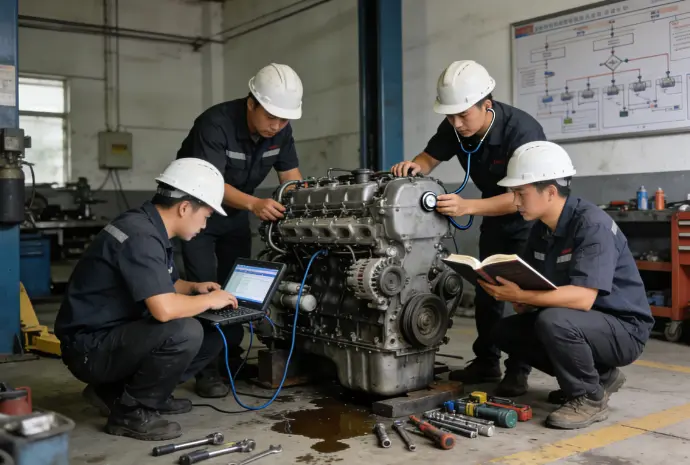
Let’s say you turn the ignition and nothing happens—no crank, no sound. In many modern engines, the ECU controls the starter circuit. It first confirms the transmission is in neutral, then activates a relay to send battery power to the starter. A failure anywhere along this path can leave you silent. Begin with the basics: check that the gear selector is truly in neutral. Then verify any external safety switches, like a cab-mounted or chassis-mounted “stop engine” switch, aren’t engaged. After that, inspect battery voltage; weak batteries often pretend to be other problems. Don’t overlook the neutral safety switch itself, usually mounted on the transmission—its wiring can corrode or come loose. If all else checks out, listen closely for a faint click near the starter relay; if you hear it but the starter doesn’t turn, the motor itself could be seized or burnt out. Occasionally, the ignition switch or its wiring is the hidden culprit, especially if other electrical features behave oddly.
Maybe the starter spins energetically, but the engine still won’t catch. Now you’re likely dealing with a fuel or sensor issue. In common rail systems, proper rail pressure is non-negotiable. If pressure doesn’t build during cranking, you’ll get no injection and no start. Start with the fuel side—it’s often the quickest to check. Any air trapped in the low-pressure line can disrupt the whole system. Begin at the fuel tank: is there actually diesel in it? It sounds obvious, but gauges can mislead. Then move to the filters. Modern diesels often have a priming pump on the primary filter; use it to purge air from the system. Crack open the bleed screw and pump until you get solid, bubble-free fuel. If the engine has been serviced recently or run dry, air might also be trapped in the high-pressure side. Loosening a high-pressure line at an injector (carefully, with rags ready) and cranking briefly can purge it. Once you’re sure fuel is reaching the pump, listen: a healthy system will often emit a distinct, rhythmic ticking from the injectors during cranking. Silence here suggests an electrical or pressure problem.
Electrical gremlins can also starve the rail. The ECU relies on signals from the crankshaft and camshaft sensors to time the injection. If one or both are missing, the engine won’t start, even with perfect fuel pressure. These sensors rarely fail completely without warning—you might have seen intermittent stalling or rough running before the no-start. Check their connectors for moisture or corrosion; sometimes simply reseating them can restore a signal. Wiring along the engine block is exposed to heat and vibration, so inspect for chafed or broken wires. Another subtle culprit is the rail pressure sensor itself. Its readings directly dictate injector timing; if it’s faulty or misreporting, the ECU may withhold fuel. In a pinch, some technicians unplug this sensor to force the ECU into a default mode, which can sometimes allow a start—this isn’t a fix, but it can point to the problem.
Hard starting—when the engine eventually fires after prolonged cranking—points to a slightly different set of issues. Think of it as the engine struggling rather than refusing. Weak compression is a classic cause. Over time, piston rings, cylinder liners, and valves wear, reducing the heat generated during compression. In colder weather, this effect is magnified; the engine may need several compression strokes to get hot enough to ignite the fuel. Glow plugs or intake air heaters are there to compensate; if they’re faulty, cold starts become a battle. But don’t assume it’s always mechanical. Poor fuel quality, especially diesel with low cetane or contaminated with water, can dramatically increase ignition delay. The engine cranks, fuel is injected, but it doesn’t burn at the right moment. Similarly, slightly low fuel pressure—from a tired supply pump or a partially clogged filter—might eventually allow enough pressure to build, but only after extended cranking. Listen carefully: if the engine speed sounds uneven or labored while cranking, it might be fighting against a stuck exhaust brake valve or another restriction in the exhaust path.
Approach each no-start or hard-start situation as a conversation with the machine. Start with what’s easiest to verify: fuel, battery, and basic sensors. Use your senses—listen for unusual sounds, look for leaks, feel for loose connections. Modern diagnostic tools are invaluable, but so is methodical, hands-on checking. Rarely does a diesel simply stop without giving some earlier hint—a longer crank last week, a slight stumble last month. Retracing recent symptoms often reveals the cause. Patience and a systematic process will usually lead you to the fault, turning frustration into a resolved repair.